What is FDM printing?
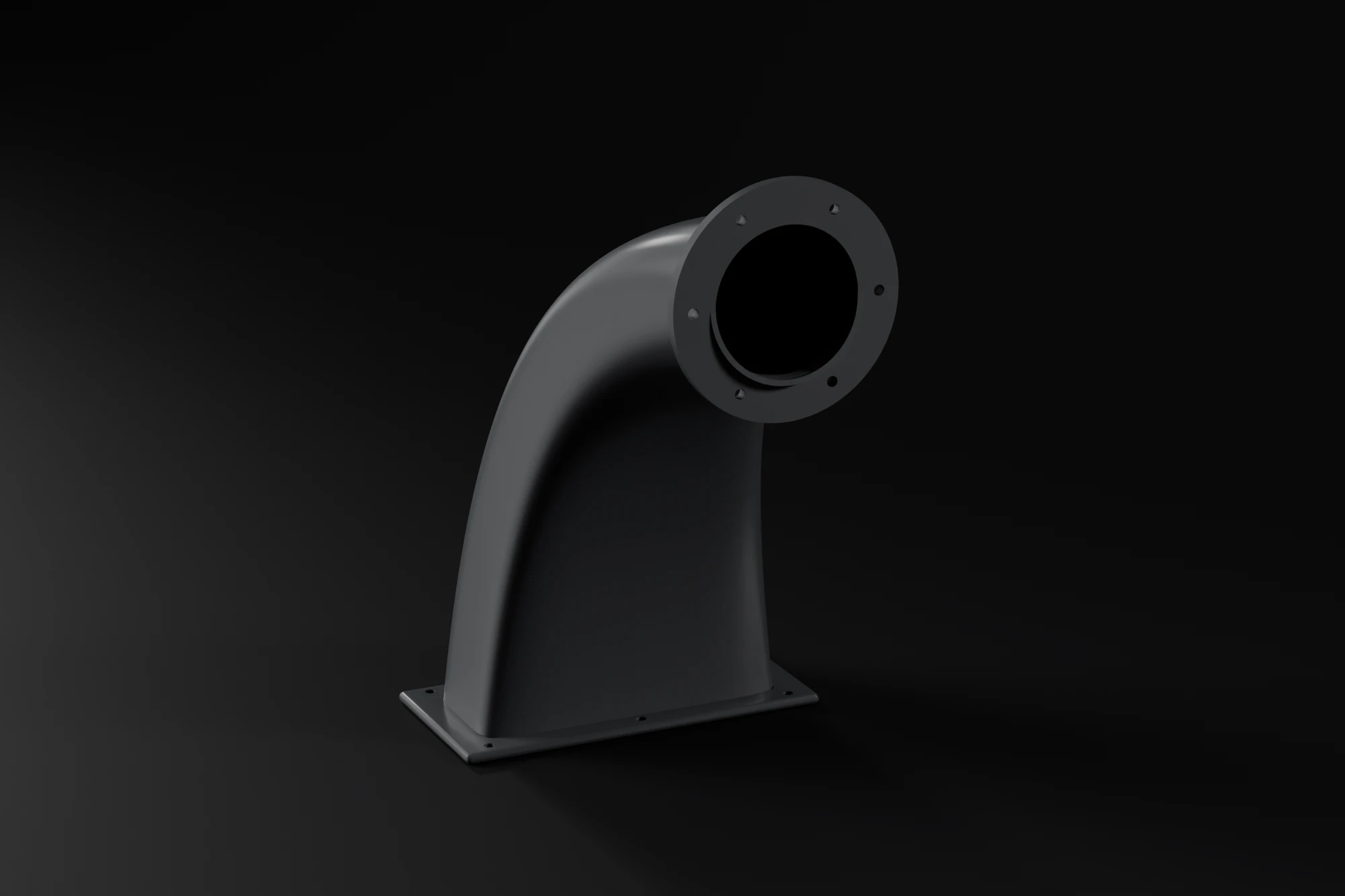
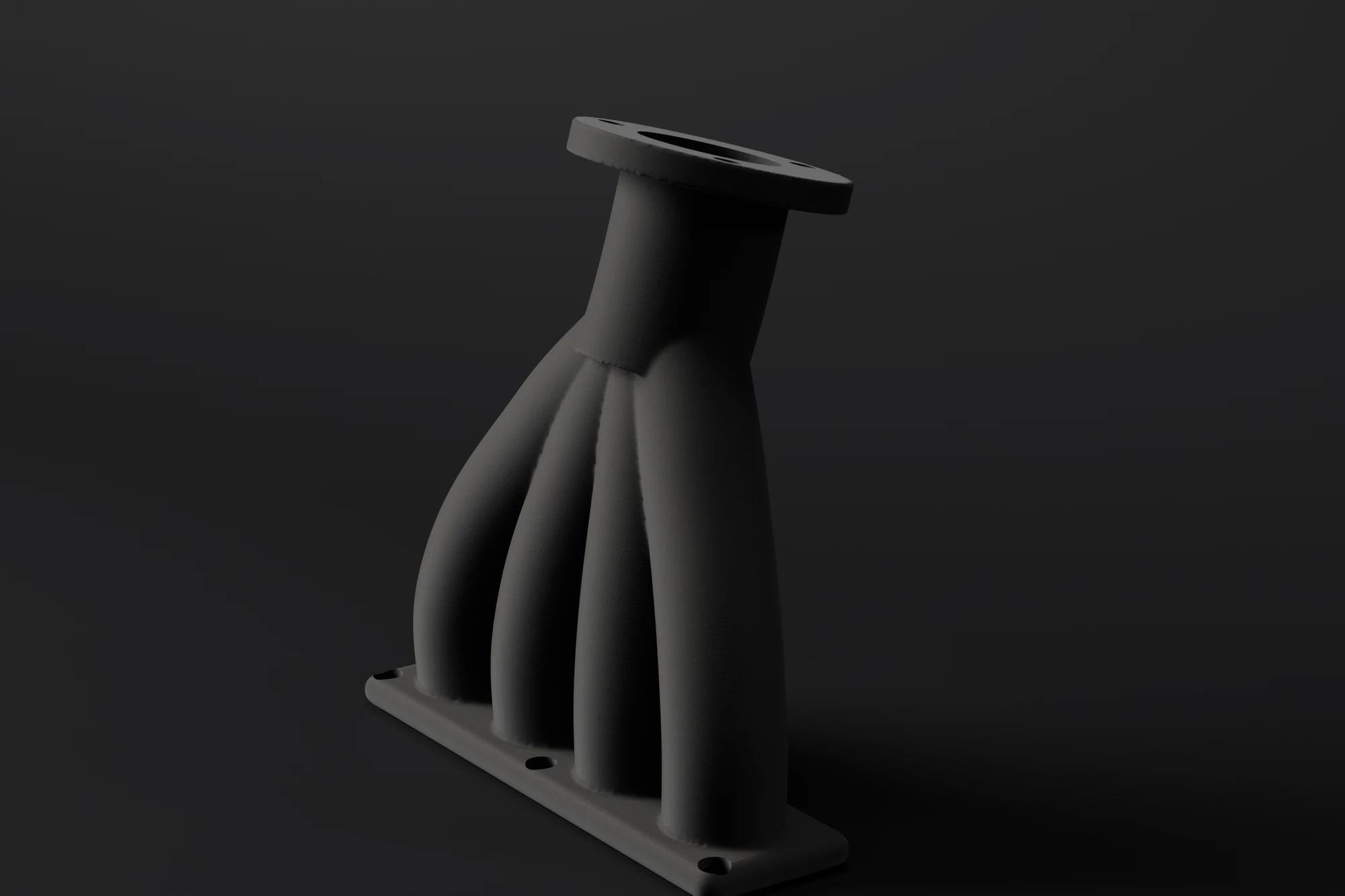
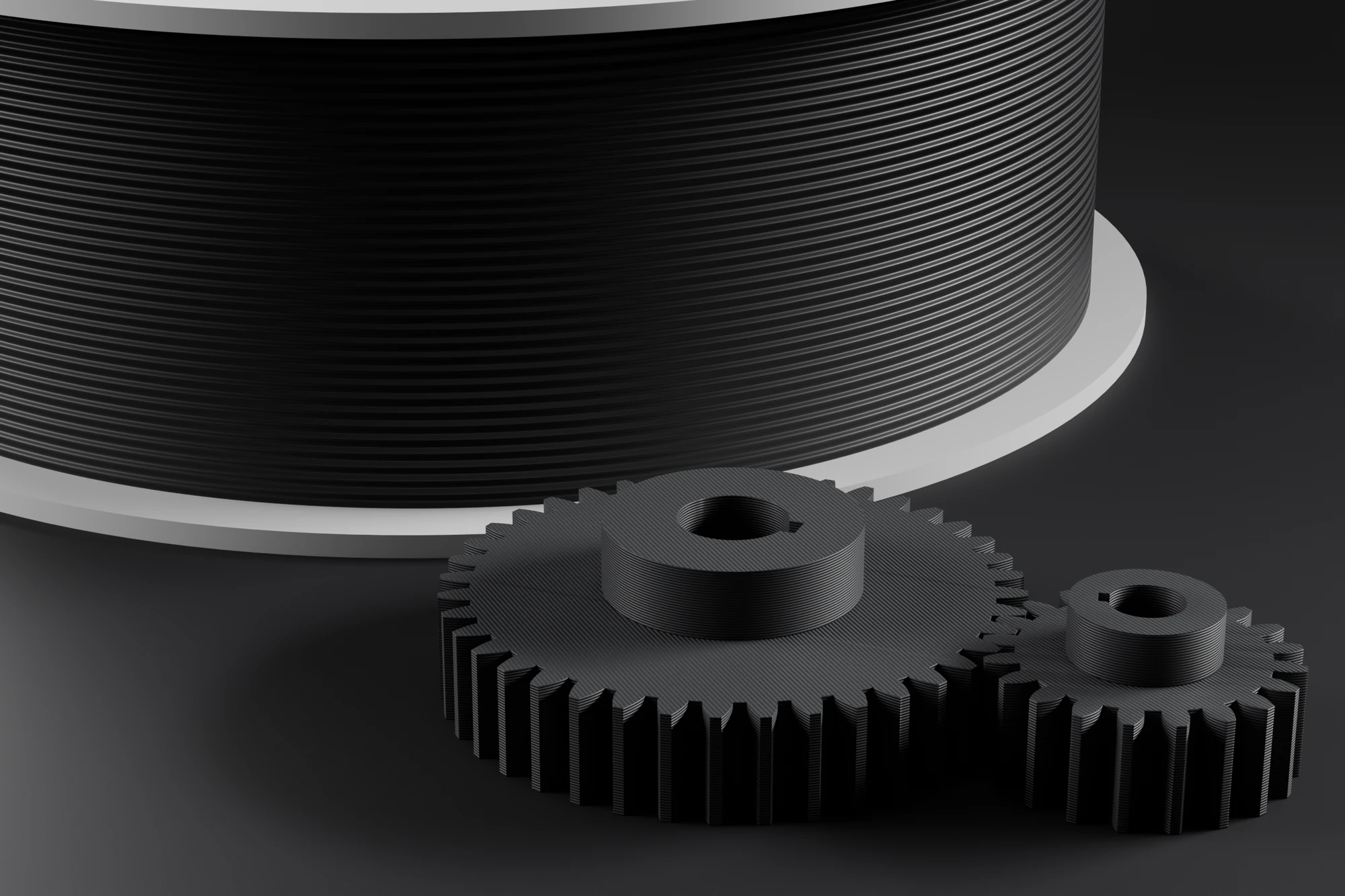
FDM stands for Fused Deposition Modeling. A printer melts plastic filament and deposits it layer by layer through a nozzle. It is the most widely used process, known for speed, low cost and the broadest choice of materials.
We run seven FDM printers of different sizes, so a small bracket and a half-metre part can both be printed in-house.
What FDM is best at
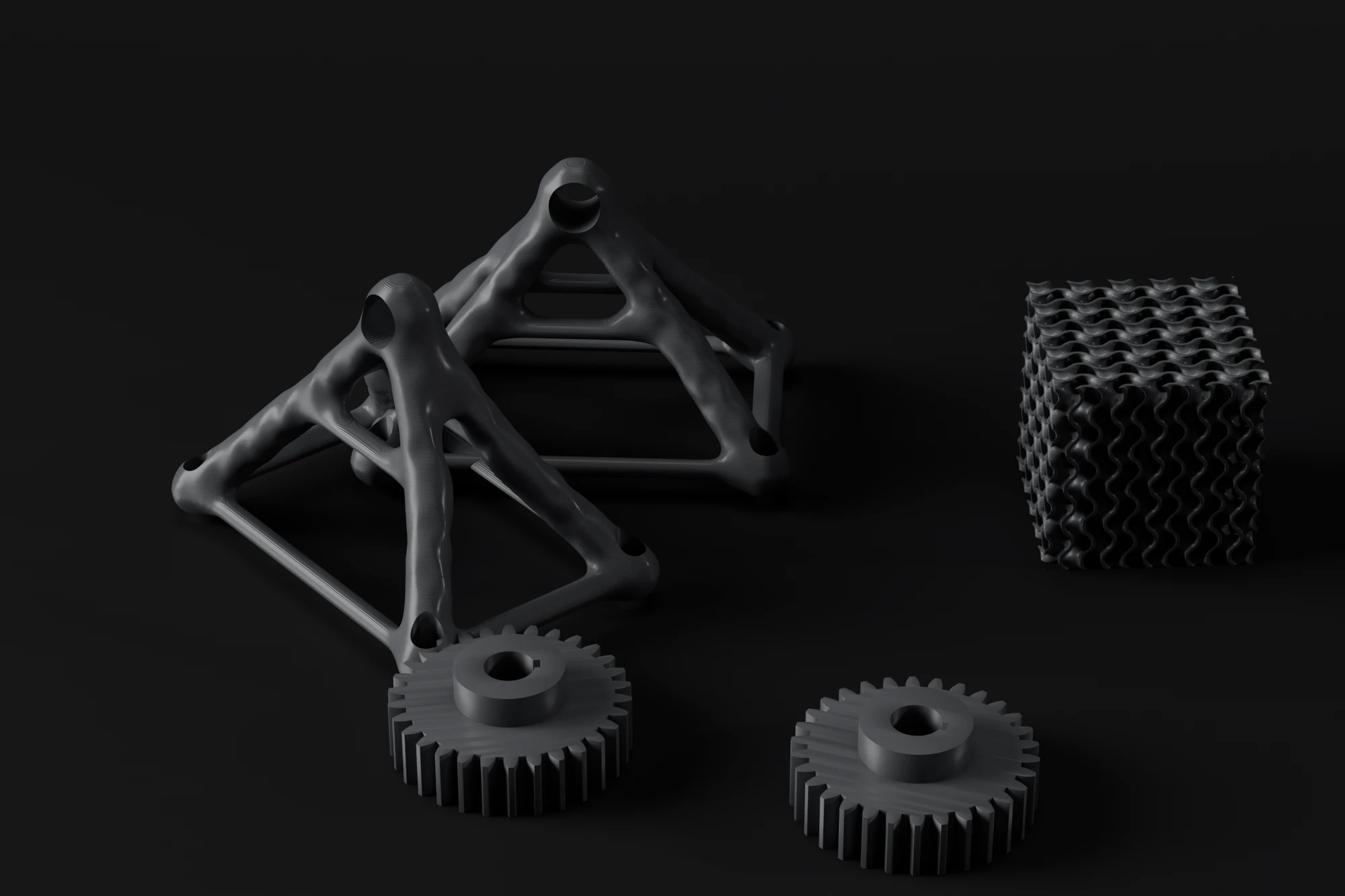
- Prototypes. Several design iterations on one plate is the quickest, lowest-cost way to test a functional part.
- Jigs, fixtures and enclosures in real engineering plastics.
- Large parts, in one piece.
- One-offs and short runs where the design may still change.
Materials: from PLA to carbon-filled and PPS
PLA or PETG covers most use cases at the best price. Move up when the part needs more.
| Material | Typical use |
|---|---|
| PLA | Prototypes, display models, enclosures. Keep it below about 60 °C and away from long moisture or outdoor use. |
| PETG | More durable than PLA, handles about 80 °C, slightly flexible. Good for functional parts. |
| ABS | Strong, up to about 105 °C. Automotive and electronics. |
| ASA | Like ABS, with much better UV resistance. For outdoors. |
| TPU | Flexible and rubber-like: gaskets, seals, grips, strain relief. |
| PA (nylon) | Strong, low friction. Gears, hinges, clips. For the best result, use SLS. |
| Carbon-filled and high-temperature grades such as PPS | For demanding parts. Ask us. |
ABS and ASA need an enclosed printer and warp more than PLA or PETG. Compare everything in the materials guide.
Large parts: up to 500 × 500 × 500 mm
Our largest FDM printer handles parts up to 500 × 500 × 500 mm. Bigger than that? We can split the model and join the pieces after printing. Smaller, detailed parts belong on another process; SLA goes up to 192 × 120 × 250 mm.
Design rules for FDM
| Feature | Rule |
|---|---|
| Walls | 1.2 mm or more (three times the 0.4 mm nozzle). 2.0 to 3.0 mm for load. Use multiples of 0.4 mm. |
| Overhangs | Up to about 45 to 50° from vertical without supports |
| Bridging | Reliable up to about 50 to 80 mm |
| Holes | Print 0.2 to 0.4 mm undersized. Add about 0.2 mm for a bolt or shaft. |
| Clearance | 0.2 to 0.3 mm per side. 0.1 to 0.15 mm per side for snap and press fits. |
| Fillets | 1 to 2 mm on inside corners |
| Infill | 10 to 20 % display, 20 to 30 % functional, 40 to 60 % for heavy load |
Walls usually give more strength than a very high infill percentage. Always print a small test piece first when a fit is tight. More in the FDM design guide.
Strength, finish and post-processing
FDM parts are weakest between layers, so orientation matters: let loads run along the layers, not across them. Layer lines stay visible. Supports leave marks, and sanding smooths the surface.
For repeated screwing, use brass heat-set inserts and screw bosses rather than threads printed in plastic.
Warping is most common in ABS, ASA and large flat parts. A slight bevel, a raft, or putting the largest face on the plate helps.
FDM, SLS or SLA?
FDM is the most affordable and fits most functional parts. Choose SLA for very fine detail or a smooth surface. Choose SLS for high stress or wear, or geometry that would need many supports.
Price, lead time and shipping
We price by weight. Setup fee once per technology, a handling fee per part, failed prints on us. Standard orders ship in 3 to 5 business days, rush in 2, with the surcharge in your quote. Current rates are on the pricing page. Pickup in Amsterdam is free, and we ship with PostNL.