What is SLS printing?
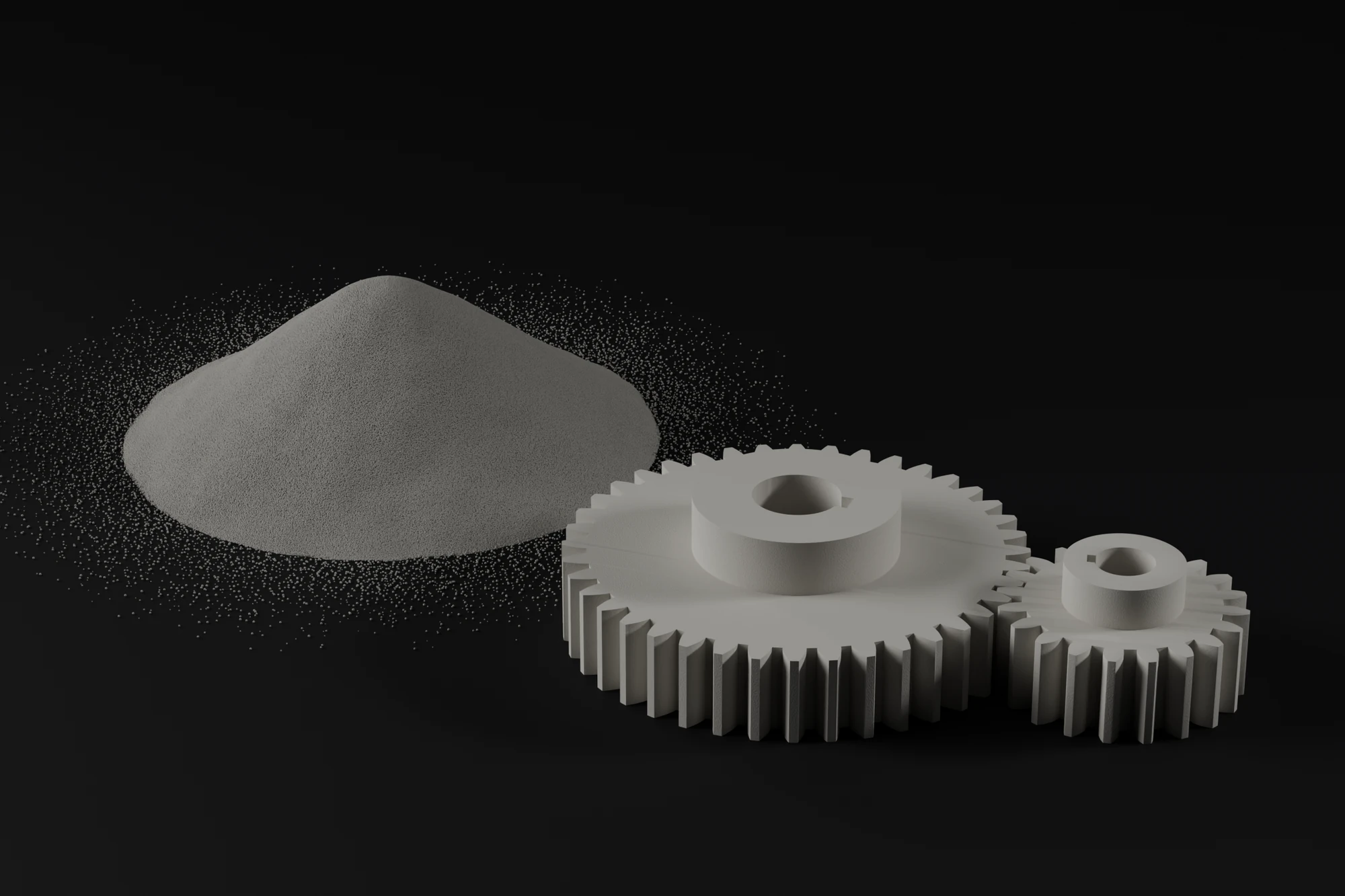
SLS stands for Selective Laser Sintering. A laser scans a bed of nylon powder and fuses it layer by layer. The loose powder around the part holds it in place while it prints, so nothing has to be supported. When the build is done, the part is cleaned out of the powder.
It is the process we use when a part has to take load, wear or repeated stress.
Why choose SLS: strength, freedom and assemblies in one print
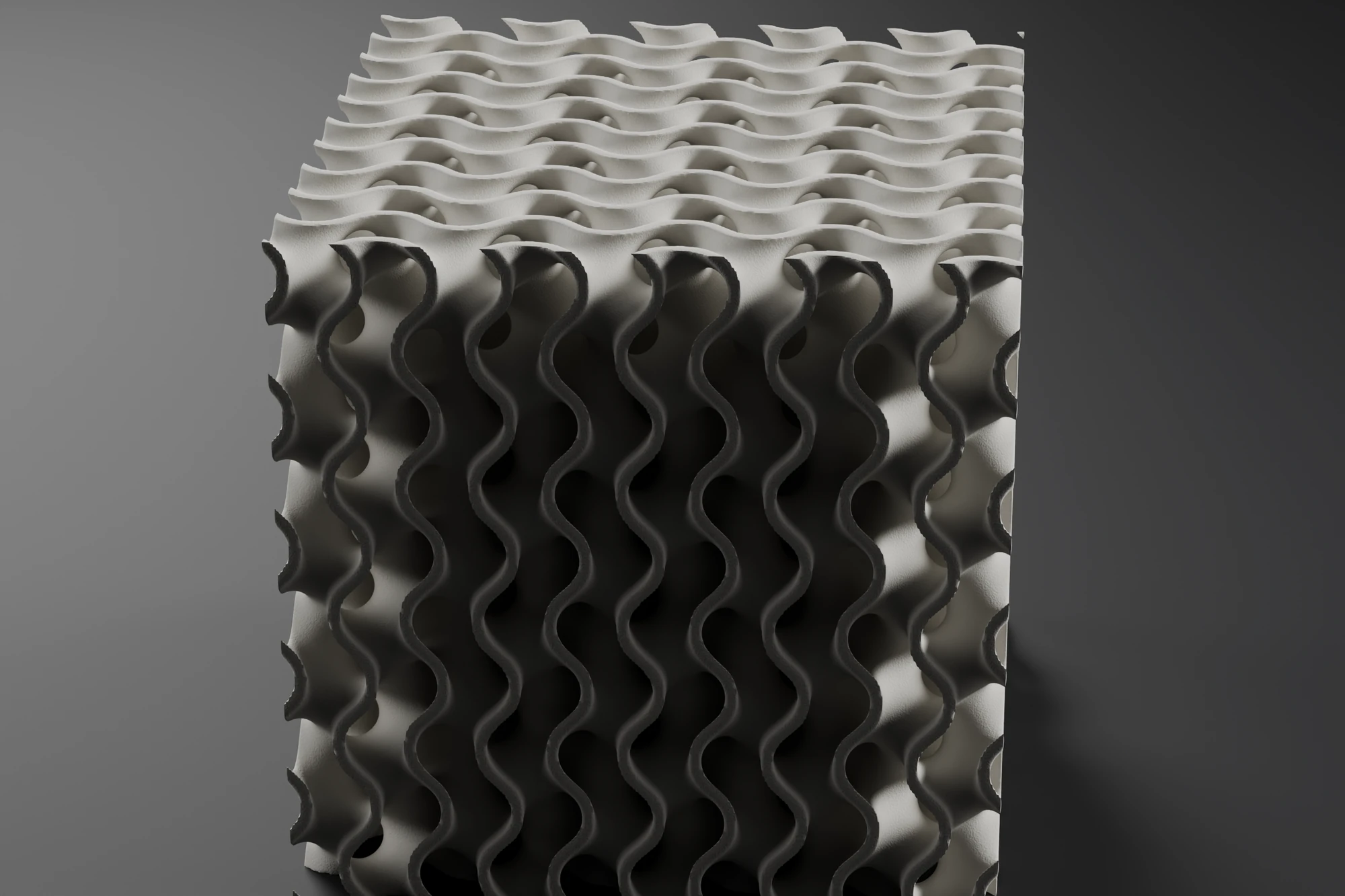
No supports means fewer design rules. Overhangs, internal channels and lattices print without extra effort, and there are no support marks to sand off.
SLS parts are nearly equally strong in every direction. FDM parts are weakest between layers; SLS parts are much less so.
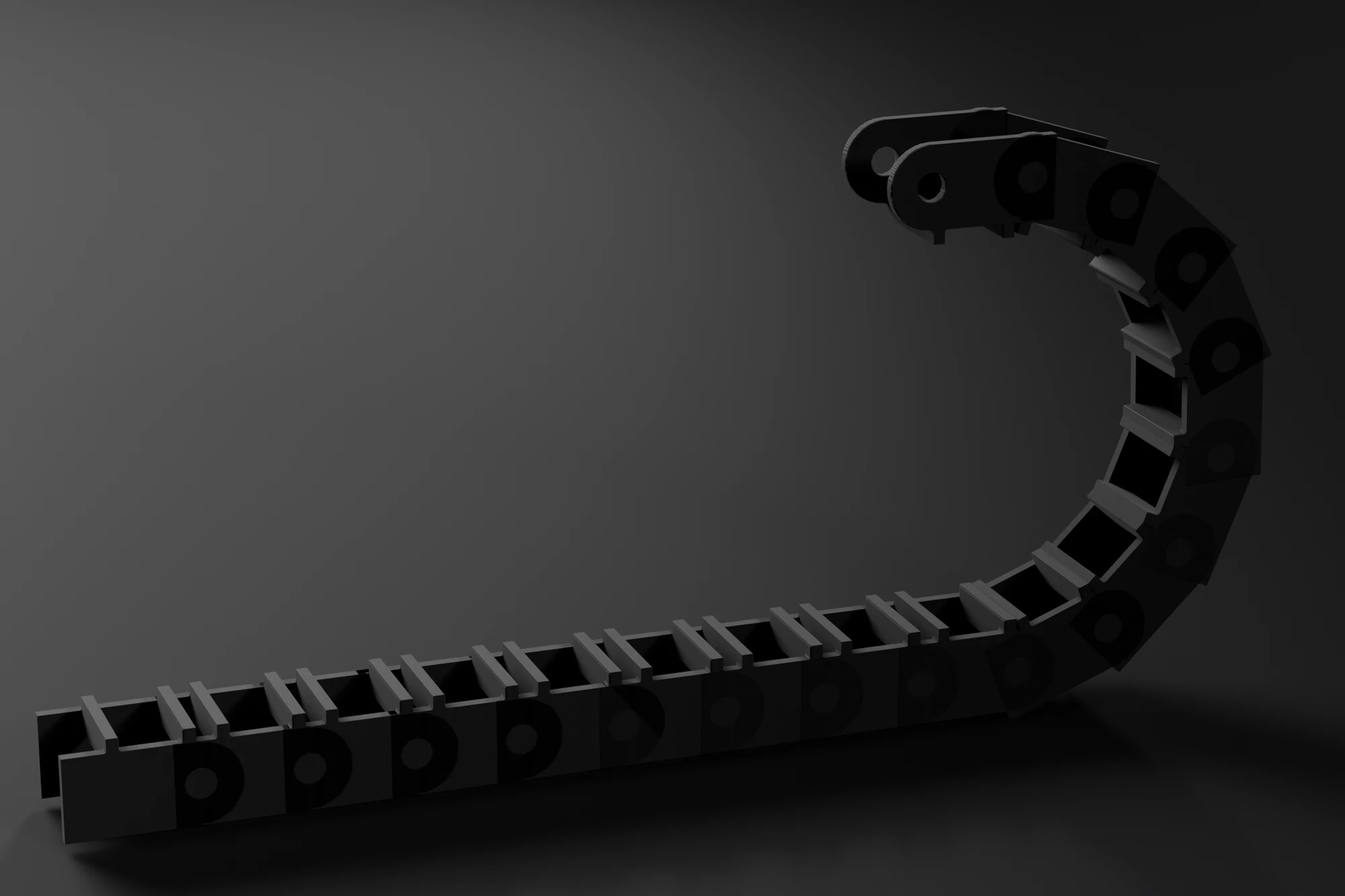
Hinges, chains and other linked parts can come out of the powder already assembled. One print, no assembly step.
Materials: PA12, PA-CF and PA-GF
We print PA12 and the filled grades PA-CF (carbon-filled) and PA-GF (glass-filled). The design values on this page are for PA12. Filled powders have their own limits, so ask us before you design for them.
Read more on the PA12 page or compare all options in the materials guide.
SLS, FDM or SLA: which process fits your part?
| Process | Choose it when |
|---|---|
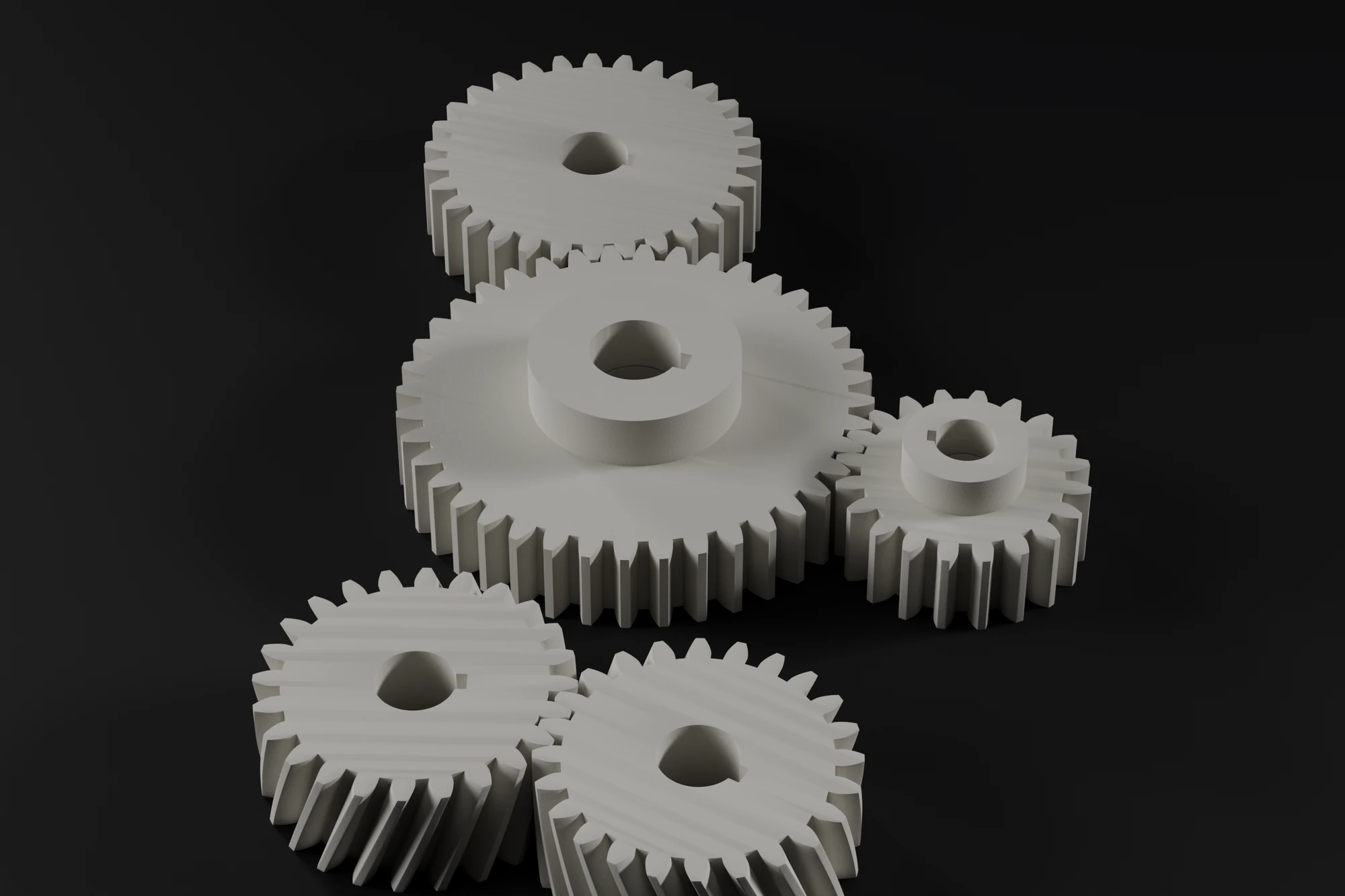
| SLS | The part is mechanical: gears, clips, hinges. It has complex geometry, internal channels or moving assemblies, or you need a small series. |
| FDM | You need a prototype, a large part (up to 500 mm) or the lowest price. |
| SLA | Surface and detail matter more than toughness, or you need a clear part. |
SLS is the most expensive of the three, and it gives the most durable parts. If you are unsure, send us the model and we will tell you which one it needs.
Design rules for SLS parts
Values for PA12. Walls and gaps are minimums.
| Feature | Rule |
|---|---|
| Wall thickness | 1.0 mm or more. 2.0 mm or more if the wall carries load. |
| Holes | 1.5 mm diameter or more. For tiny or precise holes, design undersized and drill. |
| Raised or engraved text | 1.0 mm high or deep or more |
| Moving gaps | 0.5 mm or more, 1.0 mm on larger contact areas. Each gap also needs a way out for the powder. |
| Hollow parts | At least two powder drain holes of 5 mm or more, at opposite ends. Shell 2.0 mm or more. |
Thin walls can warp as the part cools or break when the powder is cleaned off. Small gaps can fuse shut, because the laser also bonds some powder next to the part.
More detail in our SLS design guide.
Surface finish and accuracy
SLS parts are matte with a fine, slightly grainy texture. They are not glossy. Accuracy is typically about ±0.3 mm on smaller parts. Larger parts vary a little more, so leave room wherever two parts must fit together. If a part needs a specific look, say so in your order and we will tell you what is possible.
Batches and small series in SLS
Because there are no supports, parts can be nested through the whole build volume, stacked above each other and not only laid out on a plate. That suits small series, spare parts and many different parts in one run. A compact shape lets more parts fit in one build. Planning a series? See small-batch 3D printing.
Price, lead time and shipping
We price by the weight of the finished part. There is a setup fee once per technology and a handling fee per part. Failed prints and waste are on us. Your exact price shows in the quote, and the current material rates are on the pricing page.
Standard orders ship within 3 to 5 business days. Rush orders ship within 2, with the surcharge shown in your quote. Pickup in Amsterdam is free. We ship with PostNL, in the EU and worldwide.