What is SLA printing?
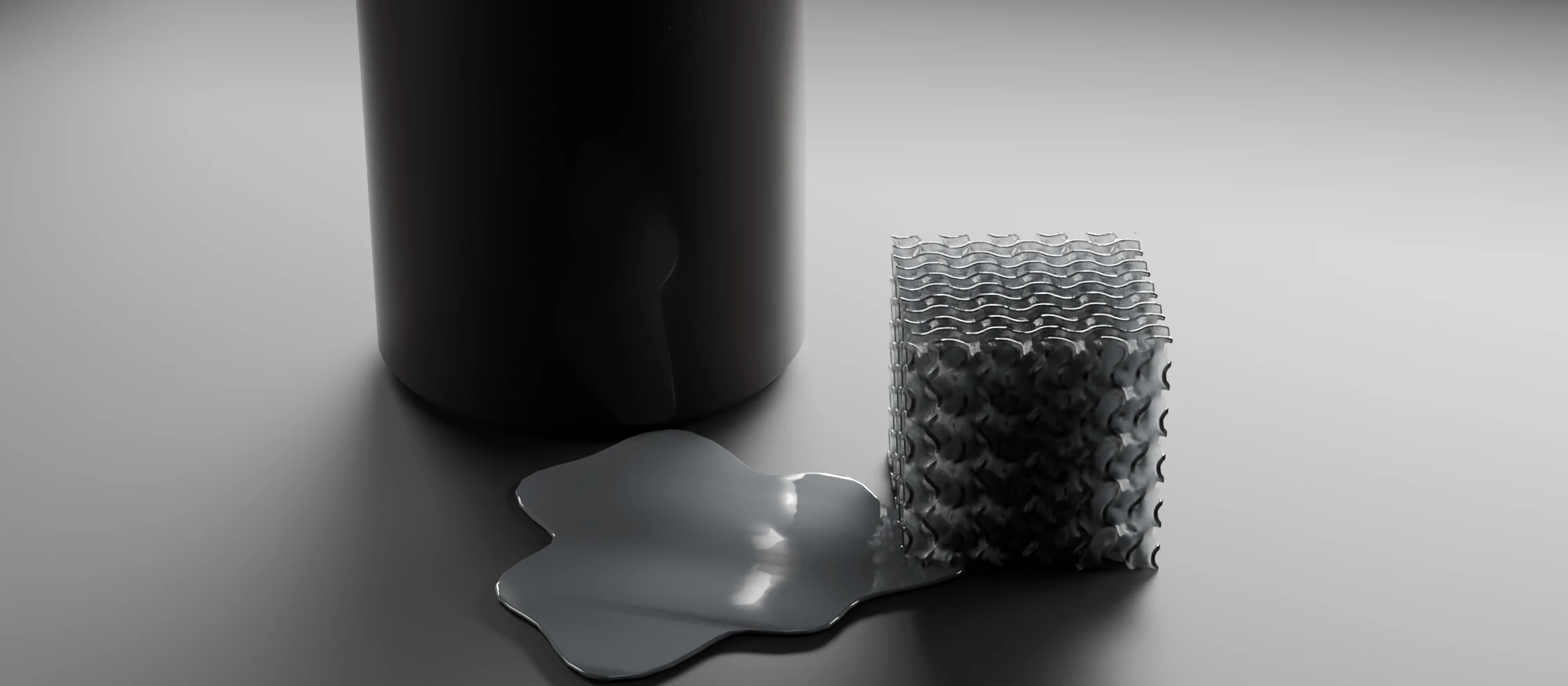
SLA stands for stereolithography. UV light cures liquid resin layer by layer. The result is a smooth surface and sharp detail that the other two processes do not match.
After printing, the part is washed and cured. Small supports hold it to the build plate while it prints, and we remove them afterwards.
What SLA is best at: surface, detail, transparency
- Surface. Organic shapes come out smooth, with barely visible layer lines.
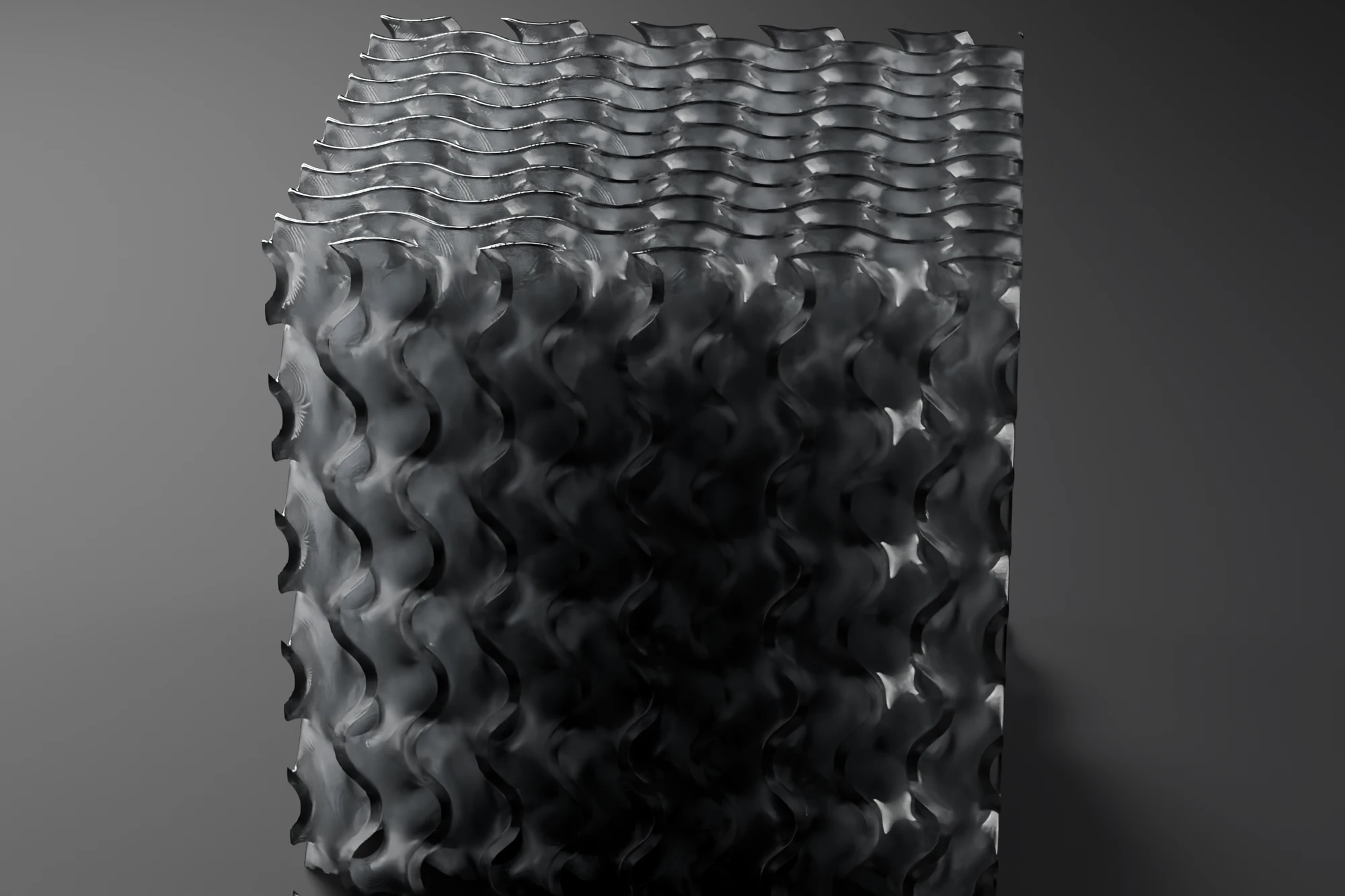
- Detail. Thin walls and small features hold their shape in resin.
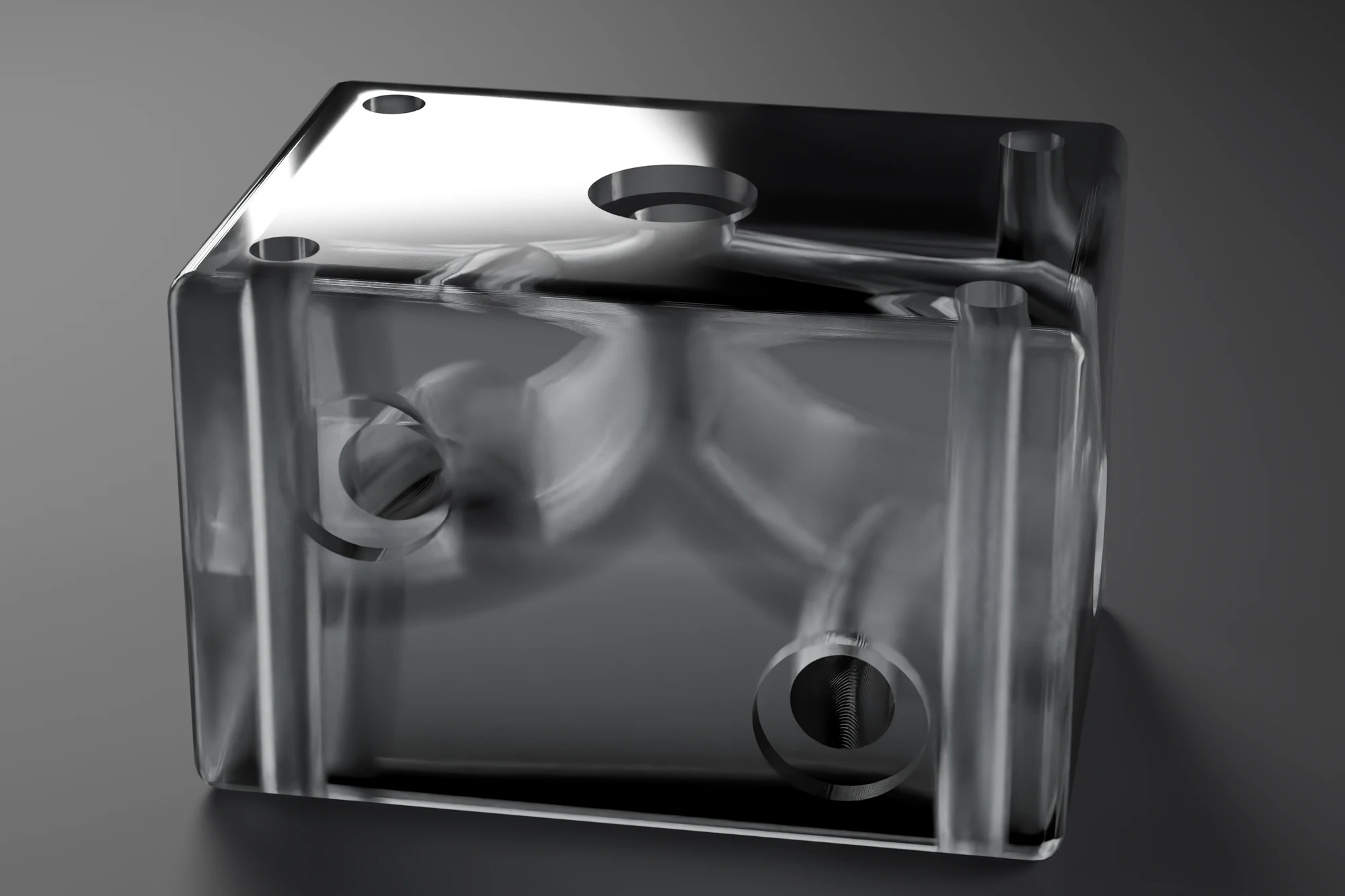
- Transparency. Clear resin lets you see flow paths and internal features in a valve block or a manifold.
Typical work: visual prototypes, small precise parts, display pieces and fine models.
Resins: standard and engineering
We offer standard resin and engineering resin, and print clear and grey parts. Standard resin is stiff, hard and holds fine detail. For more demanding parts, tell us what the part has to do and we will advise on the resin.
If a part must take impacts or flex in use, PETG or ABS on FDM, or nylon via SLS, is a better choice than resin.
Build size and splitting larger parts
The SLA build volume is 192 × 120 × 250 mm. Parts are usually tilted and raised on supports, so the largest part that fits is a bit smaller. Larger parts can be split and joined after printing, or printed in FDM up to 500 × 500 × 500 mm.
Design rules for SLA
| Feature | Rule |
|---|---|
| Free-standing walls | 1.0 mm or more |
| Walls joined on two or more sides | 0.5 mm or more |
| Raised or engraved detail | 0.5 mm high or deep or more |
| Hollow parts | Shell 2.0 mm or more, at least two drain holes of 3.5 mm or more on opposite sides |
| Closed cups | A vent of 3.5 mm or more in the closed end, or turn the opening towards the build plate |
Why hollow? We price by weight, and a solid resin block is heavy. Why the drain holes? Resin trapped inside can crack the part later.
Closed cups matter because the printer builds upside down and peels each layer off the tank floor. A closed cup acts as a suction cup and can deform the part. More in the SLA design guide.
Supports, finish and clear parts
Every point where a support touches leaves a small bump. You can sand it, but that spot is never quite as smooth as an untouched face. Parts are usually printed at an angle so supports end up on one side. If one face has to be perfect, tell us before you order.
Clear parts look slightly cloudy straight from the printer. Full clarity needs sanding and polishing, or a clear coat, on the outer faces. Internal channels cannot be polished and stay a little hazy, but you can still see flow paths. Clear resin can yellow in sunlight.
SLA, FDM or SLS?
Pick SLA when surface, detail or clarity matter most. Pick FDM for larger, cheaper functional parts. Pick SLS for strength and wear. Not sure? Send the model and we say which fits.
Price, lead time and shipping
We price by weight, so hollowing a larger part cuts the cost. Setup fee once per technology, a handling fee per part, failed prints on us. Standard orders ship in 3 to 5 business days, rush in 2, with the surcharge in your quote. Rates are on the pricing page. Pickup in Amsterdam is free, and we ship with PostNL.